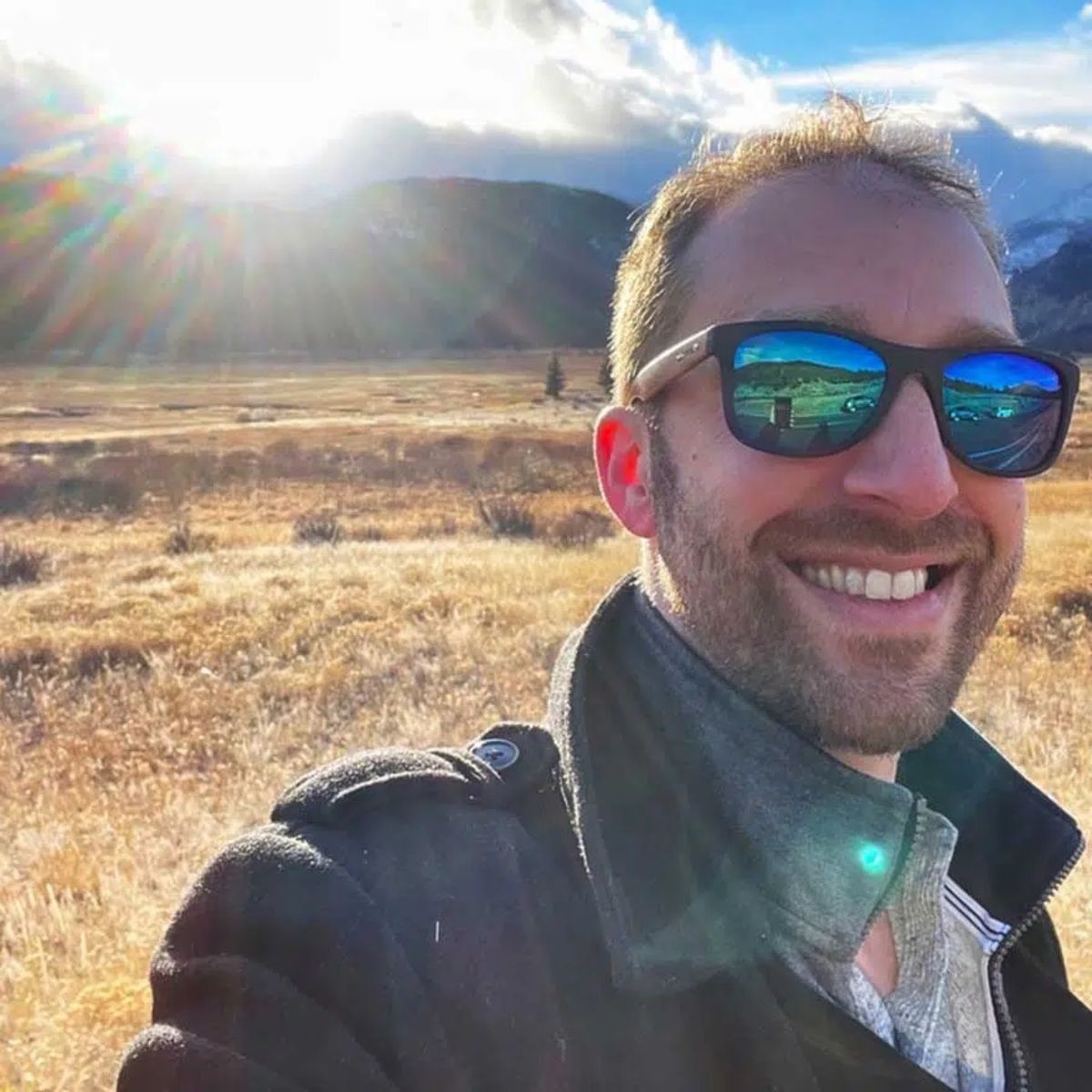
14 years ago, I maxed out every credit card I had.
Cold-emailed every small business in New Orleans.
Promised to build websites I didn’t yet know how to make.

Since then, I’ve built and exited companies, worked with thousands of founders and brands, and helped scale some of the most recognizable names in the world.

No bosses. No shortcuts. Just problems, puzzles, and momentum.

This week marks 14 years of running my own businesses, without a break.

So I wrote down the 14 biggest lessons I’d tattoo on my brain if I had to start over.

It’s what actually works in 2025. For entrepreneurs, operators, and people building the hard way.

Let’s get into it.

1. Don’t tell your story. Solve their problem.

What I learned: People don’t care how clever you are. They care what’s in it for them. There’s a time for storytelling but no friendship ever started with a one-sided monologue. Make it a two-way convo.

Proof: Steve Jobs opened every keynote with “Here’s what this means for you,” not a product tour.

Take Action: Before you post or pitch, rewrite the first sentence to make the reader the hero not you.

2. You don’t need to know the rules to win.

What I learned: I launched a video platform with WPP that hit 500K+ users/month. Back then, I didn’t even know “influencer marketing” was a thing I just emailed cool people with audiences and hoped they’d like it.

Proof: Brian Chesky (Airbnb) hacked Craigslist to get early traction. He didn’t “know the rules.” He out-hustled them.

Take Action: Stop waiting for permission. Solve the problem, ship the product, then reverse-engineer the playbook.

3. If you’re not up late tinkering, you’re in the wrong business.

What I learned: I’m still up at 1am, testing, tweaking, breaking things. Not because I have to. Because I just can’t stop. This isn’t a job. It’s a puzzle I can’t put down. I’m obsessed.

You have to be obsessed to win.

Proof: Michael Dell said, “If you want to win Olympic gold, you have to be fanatical.”

Take Action: Ask yourself: What do I do at 11pm that nobody’s asking me to do? That’s where your unfair advantage lives.

4. The future isn’t about delegation it’s about directing.

What I learned: At my first agency, I waited way too long to hire. Even today, I fight the urge just to “do it myself.” But now, things are shifting fast: I can delegate to AI. I can build automations that run 100 tests overnight.

Everyone’s getting a promotion.
Your team isn’t here to push buttons or follow SOPs. They’re here to orchestrate.

Proof: Nikita Bier (Gas, TBH, and is an advisor to us at Connyct) put it best: “The most important thing that I often instruct teams to do is develop a reproducible testing process... if you actually focus more on your process for taking many shots at bat, that's what actually reduces the risk more than anything.”

Take Action: Pick one task you still do manually (editing, outreach, follow-ups). Document it. Build the AI automation to handle it. Your job now? Be the director, not the gaffer.

5. Skills stack. And the first one is hustle.

What I learned: I maxed out every card I had to start my first agency. I emailed every small business in New Orleans. Knocked on doors. If a client needed SEO? Learn it. Needed a website? Learn that too. Every new skill gave me a new way to pay bills and grow.

Proof: This is how Gary Vee built Vayner. How Alex Hormozi learned copy. How Daymond John learned fashion. Get paid to learn.

Take Action: Make a list of high-leverage skills (e.g., sales, writing, video, automation). Offer it at a discount in exchange for a testimonial and 1 referral. Build your stack from there.

6. Distribution > Product. Every time.

What I learned: The best product doesn’t win. The product that gets seen wins. I’ve watched brands with 10x better offers lose to louder, faster ones with better hooks and better lists.

Proof: Sam Altman said it best: “Write code, talk to users, growth solves nearly all problems.” Look at Discord’s early growth built in gamer forums, not TechCrunch features.

When I did Fireball, we weren’t trying to be the best tasting whisky in the world. We wanted to be the most recognized whisky brand in the world. And we did.

Take Action: Build your audience before you build your product. Or borrow one (partnerships, creators, paid growth). No distribution = no shot.

Discover the ROI of Data-Driven Out-of-Home Ads with OneScreen

Companies using out-of-home advertising have seen monthly revenue increase by more than 50%.

Brand marketing is having its moment, and OOH ads are the most powerful medium to make a statement, telling your brand story in the real world.

See how OOH delivers on your overall marketing ROI.

7. You don’t need a cofounder. You need conviction.

What I learned: I’ve built businesses solo, with partners, and with investors.. Cofounders can help or they can hurt. But but belief is the fuel. Most people quit because they don’t believe enough to push through.

Proof: Sara Blakely (Spanx) built a billion-dollar brand alone. No cofounder, no investors, just hustle.

Take Action: Ask yourself: Would I build this for 2 years without applause? If not, don’t start.

8. Don’t overthink your first version. Just launch.

What I learned: Every time I delayed a launch, it was fear wearing a mask. The best feedback comes from shipping, not from spreadsheets or Slack. I’ve seriously regretted shipping products way too late. I have never regretted shipping early.

Proof: Instagram’s first version was literally a Burbn check-in app. The team pivoted once people latched onto photo sharing. TikTok started as Musical.ly.

Take Action: Publish the landing page. Run $100 in ads. Email 25 people. Let the market punch your idea in the face early so you can make it better, faster.

9. The best founders think in formats, not just platforms.

What I learned: A single idea can become a tweet, a thread, a carousel, a short, a keynote, a sales deck. And each version reaches a different kind of buyer. Format isn’t just delivery it’s distribution leverage.

Proof: Alex Hormozi repurposes a 10-minute idea into 50+ assets every week. Steve Jobs rehearsed product demos like they were Oscar speeches. The greats don’t just say the message they shape it for maximum spread.

Take Action: Take one idea you posted recently. Repackage it two more ways: once for speed (short-form) and once for depth (long-form). See which pulls. Then double down.

10. Speed beats strategy (until it doesn’t).

What I learned: In early stages, momentum matters more than perfection. Speed creates data. Data sharpens strategy.

Proof: Zuckerberg’s old mantra “Move fast and break things” wasn’t about recklessness. It was about learning faster than your competitors.

Take Action: Set 72-hour deadlines. Launch, test, analyze. Strategy is what you build after you’ve shipped something worth improving.

11. Burnout doesn’t come from working too hard. It comes from working on the wrong things.

What I learned: The times I felt drained weren’t from 12-hour days. They were from spending 12 hours on stuff that didn’t matter. I’d leave a 2-hour status meeting more exhausted than after a 10-hour build session.

Proof:
Steve Jobs was known for being obsessive. He once said, “The only way to do great work is to love what you do.” But what he really meant was: great work is work that matters.

Take Action: Audit your week. Label every task 1) energy-giving, 2) energy-neutral, 3) energy-draining. Cut or delegate one “3” this week. Watch what happens.

12. The internet rewards clarity, not complexity.

What I learned: When I started, I wanted to sound smart. I used overly complex language. Why did I keep using anthropomorphic in my sentences? Ego.

Now? I just want to be understood. That’s a win. I’ve had to learn to respect your time. I don’t sound cool and smart by making things complicated. You just scroll away.

Proof: The most viral posts are simple. The most effective copy sounds like how people talk, not how they write.

Take Action: Take your next idea. Rewrite it using only words a 5th grader could understand. Then publish it.

13. Your brand is your unfair advantage if you build it.

What I learned: We launched Emerald with a scrappy website thrown up in a weekend (still have the same one). And clients just… kept coming. Word-of-mouth, referrals, our networks. We were so busy doing the work that we never made time to market ourselves.

And that was a massive mistake.

If we had done for us what we did for our clients - built the brand, told the story, created content, we’d be 10x bigger by now.

Proof: Every breakout agency or creator you admire? They built the brand first, before they “needed” to. Even Liquid Death grew like a media brand, not a water company.

Take Action: Start treating your business like its own client. Block one hour a week to build your brand. Post something. Share a behind-the-scenes. Run a micro ad. Don’t just fulfill. Compound.

14. The best founders aren’t know-it-alls. They’re learn-it-alls.

What I learned: Every major breakthrough I’ve had came after saying “I don’t know but I’ll figure it out.” The best founders I’ve worked with, the best team members I’ve worked with ALL have the skill to figure it out. Learning doesn’t stop at school.

Proof: Satya Nadella transformed Microsoft with a culture shift from “know-it-alls” to “learn-it-alls.” It took their market cap from $300B to $3T.

Take Action: Ask one dumb question this week. Seek out one person who’s better at something than you. Steal their process. one (partnerships, creators, paid growth). No distribution = no shot.

If this newsletter lit a fire under you, forward it to one person who would benefit.

🎁 Bonus: Invite them to join Big Players and you’ll unlock our AI Viral Hook Generator—the same framework that’s helped us drive 50M+ views for new accounts.

{{rp_personalized_text}}

Copy and paste this link: {{rp_refer_url}}

Let’s turn that turn late-night tinkering into high-leverage growth.

Big players don’t scale by luck.
They scale by stacking skills, testing fast, building brand, and compounding distribution.

Keep Reading